Radius or postcode targeting across the Black Country
How to draw a patch Google will respect
Radius, postcode district or town targeting for Google Ads across the Black Country: which to use, the presence setting above all three, three worked patches.
Written by Daniel Stoychev, who runs the accounts · 5 September 2026 · about 9 minutes
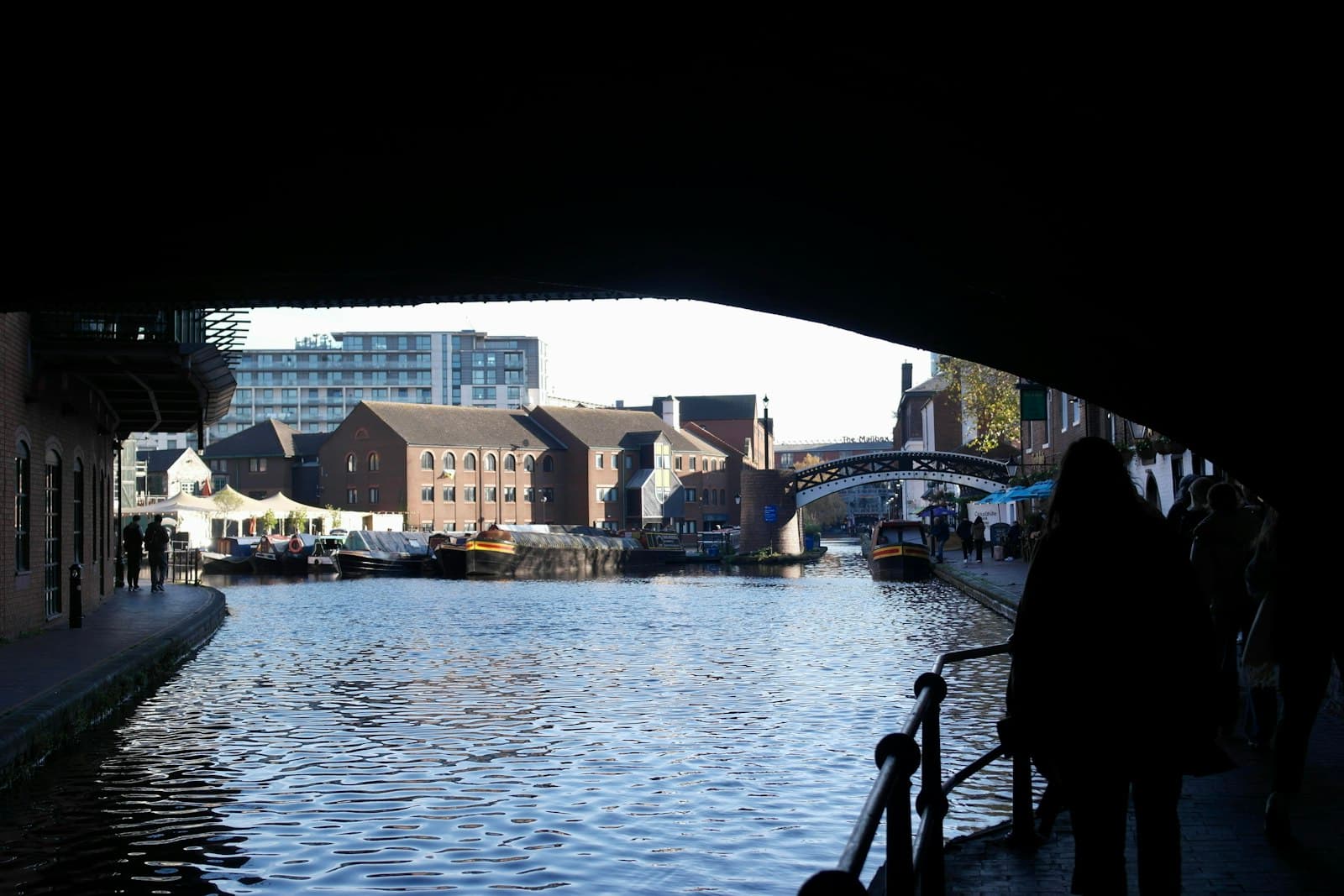
For most Birmingham and Black Country businesses the right location targeting is a list of postcode districts, not a radius, because the conurbation is continuous and a circle drawn from anywhere in it includes towns you do not serve. A radius suits a sole trader who charges by distance; a town list suits a business that genuinely covers whole boroughs; and none of the three works until the location option is set to people physically in the area rather than Google's default, which includes anyone anywhere who has shown interest in it. This guide explains the three methods, the setting above them, and three worked patches from Dudley to Sutton Coldfield.
The setting above the settings
Before choosing how to draw the patch, open the campaign's location options. Google's default is to show ads to people in, regularly in, or who have shown interest in your targeted locations. That last clause means a person in Madrid reading about the Bullring is inside your targeting. Change it to people in or regularly in your targeted locations, which Google calls presence. It is the first setting we check on every West Midlands account and it is wrong on most of them, and no radius or postcode list fixes it while it is wrong.
The three ways to draw a patch
| Method | What it does | Suits | Fails when |
|---|---|---|---|
| Radius from a point | A circle of chosen miles around a postcode or a pin | A sole trader who charges by distance from the van's base; a shop whose customers walk | The circle crosses the M5 or the M6 and includes a town on the other side you never go to |
| Postcode districts | A list such as B13, B14, B28, B30, B31 | Almost every trade, agent, garage and clinic in the conurbation, because the districts follow real neighbourhoods | The list is built from a map rather than from where the jobs actually are |
| Towns and boroughs | Named places from Google's own list: Solihull, Dudley, Walsall | A business that covers whole boroughs; a firm that serves the Black Country and nothing else | Google's boundary for the town is not yours; "Birmingham" as a target does not include Solihull |
Why the Black Country is the hard case
Wolverhampton, Walsall, Dudley and Sandwell are four boroughs with a dozen towns between them, and the towns run into one another and into Birmingham with no gap. Halesowen is in Dudley borough but sits against Birmingham's south-western edge; Smethwick is in Sandwell and starts where Birmingham's Edgbaston ends; Sutton Coldfield is inside Birmingham's boundary and a different market from Erdington next door. A radius from Dudley town centre of eight miles reaches the Birmingham city centre, Wolverhampton and the M42. A roofer who works Dudley, Tipton and Oldbury does not want any of those.
Postcode districts follow the real neighbourhoods better than any circle does. DY1 to DY3 are Dudley and Sedgley; DY4 is Tipton; DY5 Brierley Hill; DY8 and DY9 Stourbridge; B62 and B63 Halesowen; B68 and B69 Oldbury; B66 and B67 Smethwick; B70 and B71 West Bromwich; WS1 to WS5 Walsall; WV1 to WV6 Wolverhampton and its suburbs. A list built from where last year's jobs were, with the districts you decline added as exclusions, is a patch Google will respect.
Three worked patches
A Dudley roofer with two vans
Jobs last year: Dudley, Sedgley, Gornal, Tipton, Brierley Hill, Kingswinford, and a few in Halesowen. The patch is DY1 to DY6 plus B62 and B63, targeted by district, with presence-only targeting. A bid adjustment of plus fifteen per cent on DY1 to DY3 where the yard is and the jobs are densest. Exclusions: none needed, because the list is the patch. Place-name negatives: Wolverhampton, Walsall, Birmingham suburbs to the east, Stourbridge only if the roofer genuinely will not go there.
A Wolverhampton family law firm
Clients come from Wolverhampton, Walsall, Cannock and the villages north and west, and a family law client will drive twenty minutes for a solicitor they trust. A town list works here: Wolverhampton, Walsall, Cannock, Bilston, Willenhall, Wednesfield, with presence-only targeting and a small radius around the office added so the immediate streets are never missed by a boundary quirk. Birmingham is deliberately not on the list: the city has its own firms and its own auction prices, and a Wolverhampton firm competing there pays Colmore Row prices for clients who will choose the nearer office.
A Sutton Coldfield boiler engineer, one van
A radius is honest here: the engineer charges by distance and will go anywhere within about eight miles of Boldmere. But an eight-mile circle from Boldmere reaches Walsall and the city centre. So the radius is set at six miles, presence-only, and B72 to B76 plus Lichfield's WS13 and WS14 are added as districts to catch the northern jobs the circle misses. Erdington, B23 and B24, is included; Aston and the city centre are excluded because the parking makes the jobs unprofitable. The exclusion is the important half.
Bid adjustments by location
Once the patch is drawn, the locations report shows the cost per enquiry by district, and it is never even. The districts around the base convert best because the ad can name them and the business is known; the edges convert worst. Bid up ten to twenty per cent where the enquiries are cheapest and down at the edges, and re-read the report monthly. This is the one place a radius has an advantage: Google lets you bid differently by distance rings without a district list.
The report that tells you whether it worked
The locations report has two views: by targeted location, which shows the patch you drew, and by user location, which shows where the people who clicked actually were. Read the second. If it shows clicks from places outside the patch, the location option is still on the default, or a search containing a place name is matching from inside the patch, which the place-name negatives fix. If it shows nothing from a district you serve, the district is missing from the list or the bid there is too low to show.
The order of operations: presence-only first, then the district list from where the jobs actually were, then the exclusions for the districts you decline, then the place-name negatives for the towns outside the patch, then the bid adjustments from the report a month later. A radius is the shortcut for the one-van trade that charges by distance, and even then it needs the exclusions.
Follow-up questions
Should I target Birmingham as a city or use postcode districts?
Districts, for almost everyone. Google's boundary for Birmingham excludes Solihull and includes Sutton Coldfield, which suits few businesses, and a district list follows the real neighbourhoods.
What radius should a Birmingham trade use?
Only a sole trader who charges by distance should use one at all, and then small: five or six miles with exclusions for the districts you decline, because a larger circle crosses into towns you do not serve.
Why do I get clicks from outside my radius?
Either the location option is on the default that includes people interested in the area, or a search containing a place name inside the patch matched from outside it. Presence-only targeting and place-name negatives fix both.
Can I bid more in some districts than others?
Yes. Location bid adjustments raise or lower the bid by district or by distance ring, and the locations report shows the cost per enquiry that should drive them.
Do Performance Max campaigns respect the same targeting?
They take the same locations and the same presence setting, but they have no search terms report, so a wrong radius is harder to spot. Check the user-location view of the locations report for them too.