Google Ads for the Birmingham Christmas market weeks
Six weeks when the city centre doubles its footfall, and what a restaurant, bar or shop should run from early November to Christmas Eve
Birmingham's Christmas market runs from early November to Christmas Eve. The searches it creates, the six-week campaign to run, and when to stop.
Written by Daniel Stoychev, who runs the accounts · 6 October 2026 · about 7 minutes
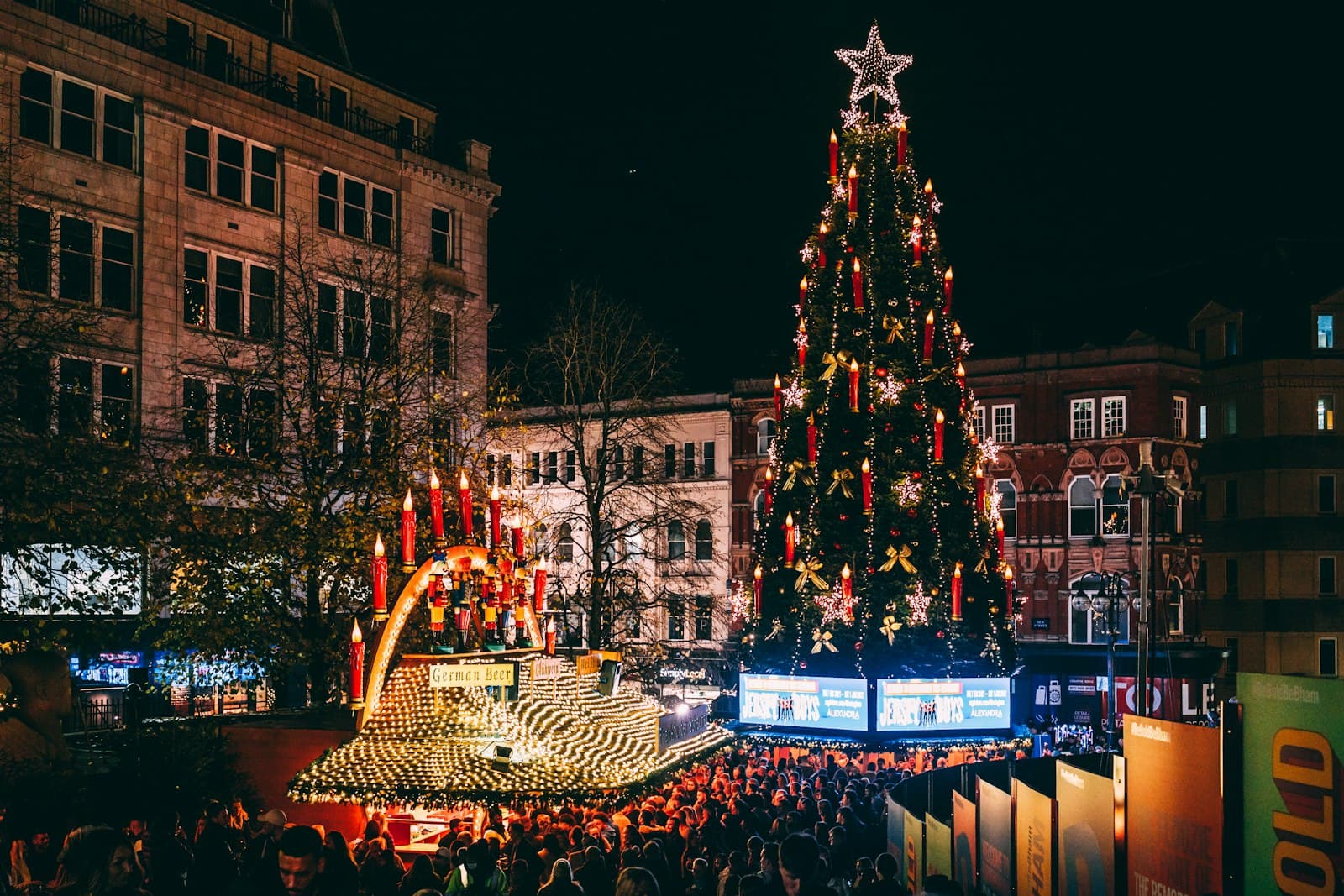
From early November to Christmas Eve the German market fills New Street and Victoria Square, and the searches a city-centre restaurant, bar or shop lives on change shape for six weeks: restaurants near the Christmas market, bars near New Street tonight, Christmas party Birmingham, late opening Jewellery Quarter. The campaign for those weeks is a separate, dated one, with its own budget, its own ads that say the market by name, a radius drawn around the market rather than the business, and an end date set before it starts. Run inside the everyday campaign, the six weeks inflate every number in the account and teach the bidding a December that does not come back in January.
What changes in the searches
| Search shape | Who types it | What they want | Page to land on |
|---|---|---|---|
| near the christmas market, near new street, near victoria square | Visitors on foot, on a phone, now | A table or a seat within ten minutes' walk | A page that says the walking time from the market and takes a booking |
| christmas party birmingham, office party venue | Someone booking for a group, from a desk, weeks ahead | Set menus, a deposit, a date | The party page with the menu, the capacity and the enquiry form |
| late opening, open until, sunday opening birmingham | Shoppers planning an evening | The hours, today | The home page, with the hours in the first screen and in the ad |
| christmas gifts birmingham, jewellery quarter christmas | Gift buyers with a budget and a deadline | Something they can carry home tonight | The gift page, with the last order date for anything made or posted |
The first row is the one most businesses miss. It is a search typed standing in the crowd, and it is won by distance and by the words near the market in the ad, not by the brand. The fourth row is the one shops underprice: a gift search in December carries a budget attached, and a page that says the last day for engraving or posting answers the question the buyer has not asked yet.
Build it as its own campaign
- A separate campaign named for the market and the year, with a start date in the first week of November and an end date of Christmas Eve, set before launch. The end date is the control that stops the January hangover.
- A location target drawn as a small radius around Victoria Square, not around the business, with the presence setting so that it reaches people standing there and not people reading about Birmingham from elsewhere.
- Ads that say the market by name and the walking time: five minutes from the Christmas market, table tonight. Location insertion can carry the ward or the city; it cannot say the market, so that line is written.
- An ad schedule that follows the market's hours and the business's, with the evening weighted, and a bid adjustment for phones, which is nearly every search on the first row.
- A budget that is the six-week budget divided by forty-two days, with the daily budget maths from our management page, so that the campaign does not spend December's money by the second weekend.
- The everyday campaign left alone, with its own budget, so that January's numbers are January's.
The party bookings are a different campaign again
Office party searches start in October, are typed from a desk by one person booking for twenty, and end around the second week of December when the dates are gone. They do not belong in the market campaign, whose searches are typed on foot, and they do not belong in the everyday campaign either, because they carry a season with them. A third dated campaign, October to mid-December, with the party page as its only landing page, a form that asks for numbers and a date, and a call tracked as a conversion when it lasts a minute, keeps the three kinds of December apart. The budget for it is set from last year's party revenue, which most restaurants know to the pound, and the ads say the two things a booker needs: a set menu and a deposit.
A shop's version of the six weeks
A Jewellery Quarter shop or a Digbeth maker runs the same structure with different words. The near-the-market searches become gifts and last-minute, the party searches become corporate gifts and hampers, and the one line that moves orders is the last date: for engraving, for posting, for collection. It goes in the ad from the third week, because the person searching in the second week of December is choosing between shops on whether it will arrive. Shopping ads, where the shop has a feed, run beside the search campaign with the same end date, and the product titles carry the gift words for six weeks and lose them on Christmas Eve.
The negatives that matter in December
- The market's own name with stall, stallholder, trader, vacancies, apply: people who want to sell at the market, not eat near it.
- Opening times, dates, map, parking, when does: information searches about the market itself, which the council and the news answer and which never convert.
- Frankfurt, Germany, flights: a share of the searches are about the other Christmas market.
- Christmas party with free, cheap, ideas, games: the person is planning, not booking.
The quickest read of last year: open the search terms report for 1 November to 24 December, sort by cost, and mark every row that mentions the market. If those rows were served by the everyday campaign, the budget and the bidding were shaped by six weeks that will not repeat, and this year's separate campaign is the fix.
What to measure, and when to stop
Bookings and calls, by day, against the market's calendar, with the weekends and the last week before Christmas read on their own. The campaign is judged on cost per booking across the six weeks, not on the clicks it attracted on the busiest Saturday. On Christmas Eve it ends, by its end date, and the first week of January is read from the everyday campaign alone, which is the comparison the separate campaign exists to make possible. If January's cost per booking in the everyday campaign is no worse than October's, the split did its job.
The hospitality page says how we run this for restaurants and bars in the city centre through the year, and the shop guide beside this one covers the gift season for a retailer with a counter and a website.
Follow-up questions
When should a Birmingham restaurant start its Christmas market campaign?
The week the market opens, in early November, with the campaign built and the ads approved the week before. Party bookings start earlier, from October, in the everyday campaign.
Should the campaign target Birmingham or the market?
A small radius around the market with the presence setting, for the searches typed on foot. Party searches are targeted wider, because they are typed from a desk.
Why a separate campaign rather than a bigger budget?
So that the six weeks do not shape the bidding and the numbers of the everyday campaign. The end date is the control.
What should the ad say?
The market by name and the walking time, the thing the searcher wants tonight, and the hours. Location insertion cannot name the market, so that line is written by hand.
Is it worth it for a shop outside the city centre?
For gift searches with a deadline, yes, if the page states the last order date. For the near-the-market searches, no; those are won on distance.